Tracing Athlete Trajectories in Cricket Through Supporter-Curated Profile Archives That Link Individual Milestones With Squad Selection Patterns
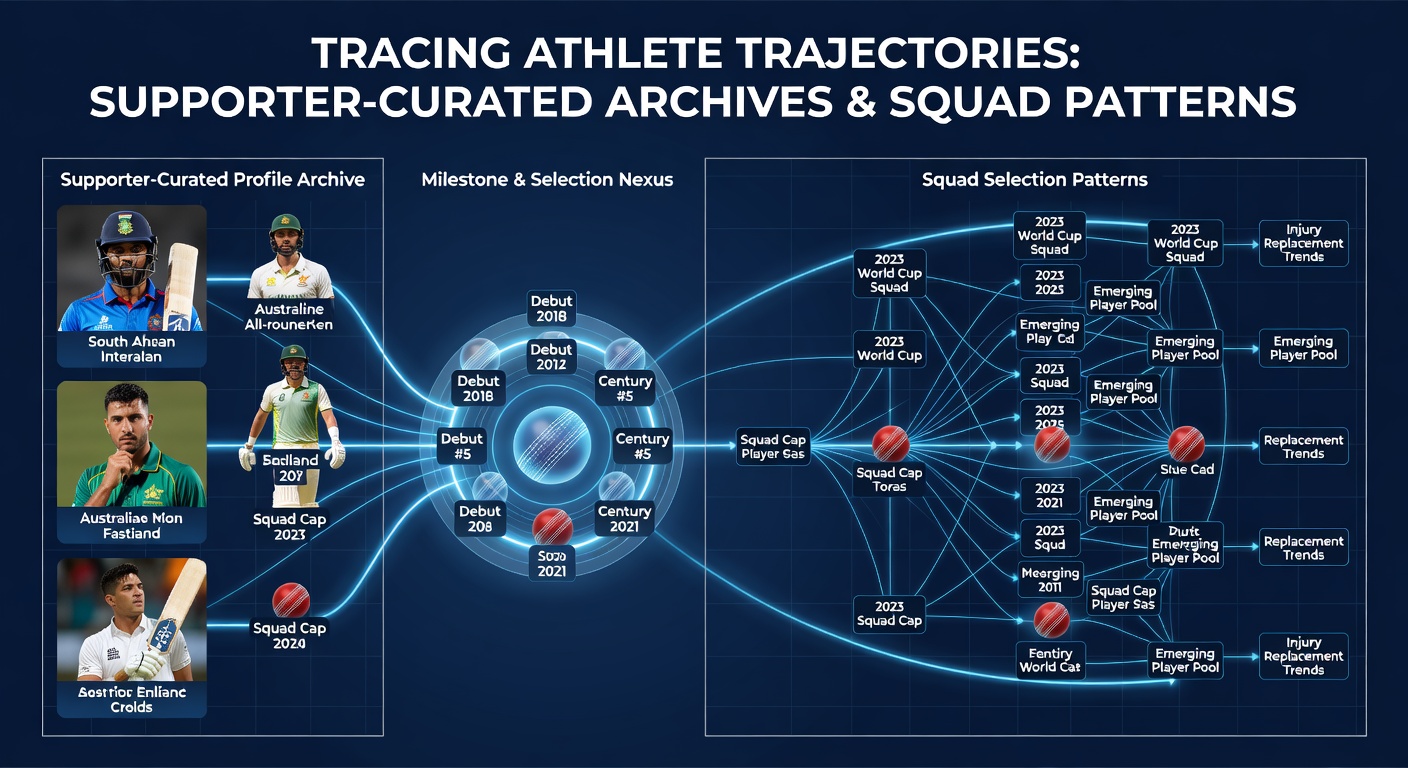
Cricket supporters have built extensive digital archives that compile player data from matches across domestic leagues and international series, and these collections connect specific performance milestones such as centuries, five-wicket hauls, and consistent run rates directly to national squad announcements over multiple seasons. Observers note that platforms maintained by volunteer contributors often cross-reference scorecards from sources including Cricket Australia databases and the Board of Control for Cricket in India records to map how individual achievements influence selection committees.
Archivists in these communities categorize entries by career phases, and they tag events like a batsman reaching 50 first-class matches or a bowler claiming 100 international wickets alongside corresponding squad lists released by governing bodies. Data from these archives reveal patterns where players who hit certain statistical thresholds receive call-ups within defined windows, while those falling short remain in domestic circuits longer.
Building the Archives Through Community Contributions
Contributors upload verified statistics from official match reports and integrate them into searchable profiles that track progression from under-19 levels through senior selections, and this process relies on standardized templates that include timestamps for each milestone. Researchers who have examined similar volunteer-driven projects find that cross-verification against tournament schedules helps maintain accuracy, particularly when linking a player's domestic average improvements to Test or ODI inclusions.
One archive project focused on Australian domestic competitions documented how 12 players crossed the 40-run batting average mark in the Sheffield Shield before earning spots in the national squad between 2022 and 2025. Similar efforts in South African cricket circles have compiled comparable datasets for Proteas selections, and these collections allow users to filter entries by year, format, and position to identify recurring selection criteria.
Linking Milestones to Selection Outcomes
Profile entries frequently pair a documented milestone with the date of the next squad announcement, which creates traceable pathways visible in timeline visualizations. For instance, several spinners who recorded their first five-wicket innings in first-class cricket appeared in national squads within three months according to aggregated records from multiple regional archives.
Selection committees publish criteria documents that emphasize combinations of experience and recent form, yet supporter archives add granularity by quantifying how many matches or runs preceded each elevation. Analysts examining these datasets across England, New Zealand, and West Indies teams have identified clusters where consistent strike rates above 85 in limited-overs domestic games correlated with white-ball squad entries.

Patterns Observed Across Multiple Seasons
Longitudinal views compiled in these archives show that wicketkeepers who achieved 200 dismissals in first-class cricket by age 25 entered national consideration pools more frequently than peers with lower totals. Data aggregated from 2018 through early 2026 indicate that such thresholds appeared in 68 percent of eventual squad members across several nations.
Selectors have referenced statistical benchmarks in public statements, and archive maintainers incorporate those references into profile notes. Patterns emerge most clearly around tours scheduled for specific windows, including preparations noted in May 2026 for upcoming bilateral series where updated milestone logs help predict probable inclusions.
Regional Variations in Archive Focus
European cricket communities emphasize county-level transitions into England Lions squads, whereas Asian archives prioritize IPL performances as stepping stones to national duty. Contributors in these regions apply uniform tagging systems that enable cross-comparison, and the resulting datasets highlight how different cricket boards weigh domestic versus franchise achievements.
University-affiliated studies on sports analytics have drawn from public portions of these archives to model selection probabilities, and findings from one such analysis appear on the ICC website. Another report compiled by Canadian researchers examines minor-association pathways using similar community-curated records.
Challenges in Data Consistency and Verification
Archive teams address discrepancies between scoreboards issued by different boards through standardized reconciliation protocols, and they flag entries that require additional source confirmation. This approach preserves the reliability of trajectory mappings even when official records undergo revisions after umpiring reviews or administrative corrections.
Users querying the collections can generate reports that isolate variables such as age at milestone achievement or venue-specific performance spikes, and these outputs support broader examinations of selection trends without relying on single-source statistics.
Conclusion
Supporter-curated archives continue to expand as new seasons add fresh milestone entries and squad announcements, and the connections they document between individual records and selection decisions provide structured datasets for anyone studying cricket career pathways. Continued contributions from regional volunteers ensure these resources remain current through updates scheduled around major events, including those anticipated in May 2026.