Surfers Compare Fin Box Placements Through Shared Reef Break Sessions to Enhance Maneuverability Before Pro Tour Stops
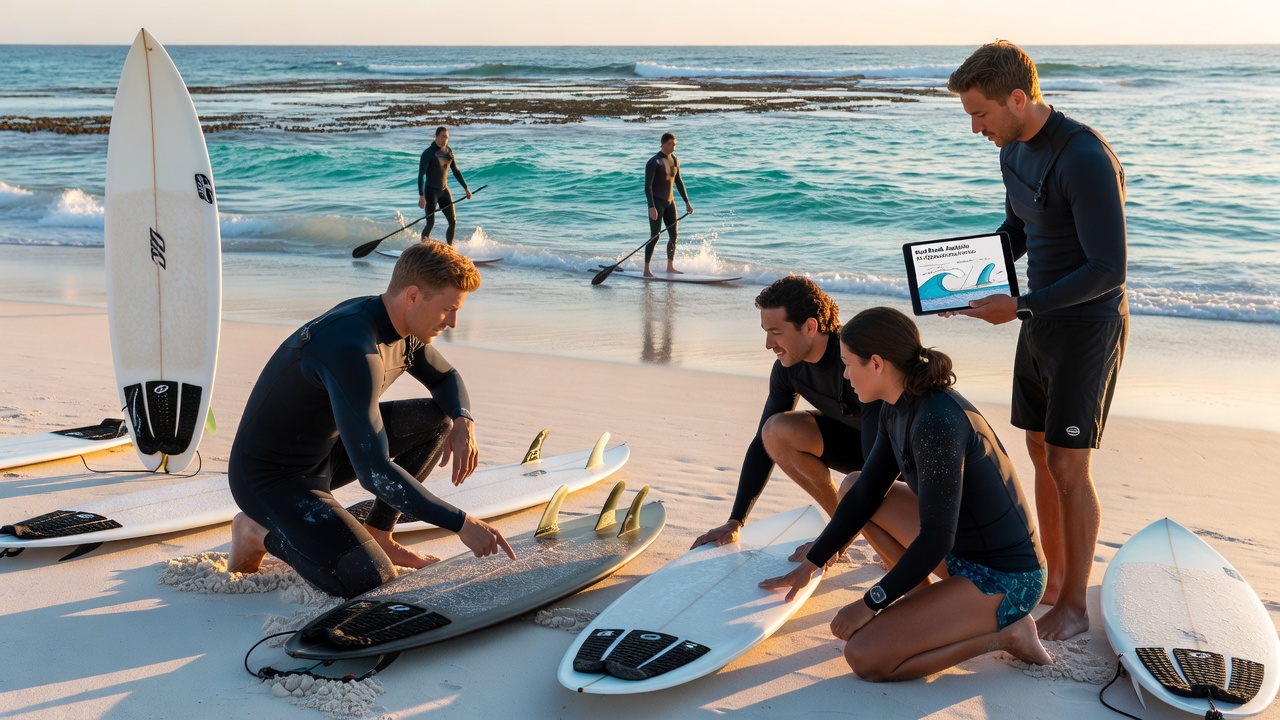
Surfers have long examined fin box placements as a key variable in board performance, and recent group sessions at reef breaks demonstrate how collective testing refines setups ahead of professional tour events. These sessions allow participants to swap boards, adjust fin positions, and record changes in turn radius and speed through consistent wave conditions.
Fin Box Configurations and Their Mechanical Effects
Fin boxes house the fins that provide directional control, with placement options ranging from traditional single-box setups to multi-box configurations that permit fore-aft shifts of up to 5 centimeters. Data from surf equipment manufacturers indicate that moving the fin cluster forward increases pivot response during bottom turns, whereas rearward positions extend hold through steeper faces. Observers note that reef breaks, with their predictable wave shapes and consistent power, create controlled environments where these differences become measurable within a single session.
Studies conducted by the Australian Institute of Sport on hydrodynamic forces show that a 2-centimeter forward shift in the center fin can reduce turning radius by approximately 8 percent in waves between 1.5 and 2 meters. Participants in shared sessions often mark each adjustment on waterproof boards and compare ride times between buoys to quantify improvements without relying on subjective impressions.
Shared Sessions at Reef Breaks as Testing Platforms
Groups of competitive surfers coordinate sessions at locations such as those along the North Shore of Oahu or the reefs near Margaret River in Australia to isolate variables like fin placement while holding wave size and wind direction constant. Each rider completes a set number of waves on a given configuration, then rotates boards so that multiple athletes experience identical setups. This rotation produces comparative data points on how placement affects drive out of turns and release at the lip.
Coaches record metrics including wave count per hour and average speed measured by GPS watches, then compile results for later review. The process reveals patterns such as improved rail-to-rail transitions when the side fins sit slightly wider in the boxes, a finding confirmed across several sessions rather than isolated trials.

Application to Pro Tour Preparation
Professional events scheduled for July 2026 at reef-heavy venues place added emphasis on fine-tuning equipment well in advance. Teams use the intervening months to run repeated comparison sessions, allowing riders to lock in placements that match the expected wave profiles at those stops. Historical contest data from similar locations indicate that boards optimized for quick directional changes score higher in maneuvers that require rapid redirection.
Industry reports from the Surf Industry Manufacturers Association document an increase in adjustable fin systems among elite competitors, with adoption rates rising from 35 percent in 2022 to 62 percent in 2025. These systems facilitate the on-site tweaks that shared sessions identify as beneficial.
Community Data Sharing and Iterative Refinement
Participants upload session notes to private forums where riders from different regions contribute observations on fin angles and box offsets. One documented case involved a cluster of athletes who discovered that a 1.5-centimeter offset between the center and side fins improved recovery speed after aerial maneuvers, a detail verified across three separate reef locations before being adopted more widely.
Academic work from the University of Plymouth’s coastal engineering department has examined similar variables in controlled flume tests, confirming that small positional changes produce measurable shifts in lift and drag coefficients. Surfers integrate these laboratory findings with field data gathered during group sessions to narrow the range of placements worth testing on tour.
Conclusion
Reef break sessions continue to serve as practical laboratories where surfers refine fin box placements through direct comparison and shared metrics. The approach supplies concrete performance data that translates to competitive edges at upcoming pro tour stops, including those planned for July 2026. As measurement tools become more accessible, the precision of these collective evaluations is expected to increase further.