Rowing crews leverage shared oar blade angle data to fine-tune boat configurations prior to seasonal competitions
Anna Jung · Aug 22, 2026
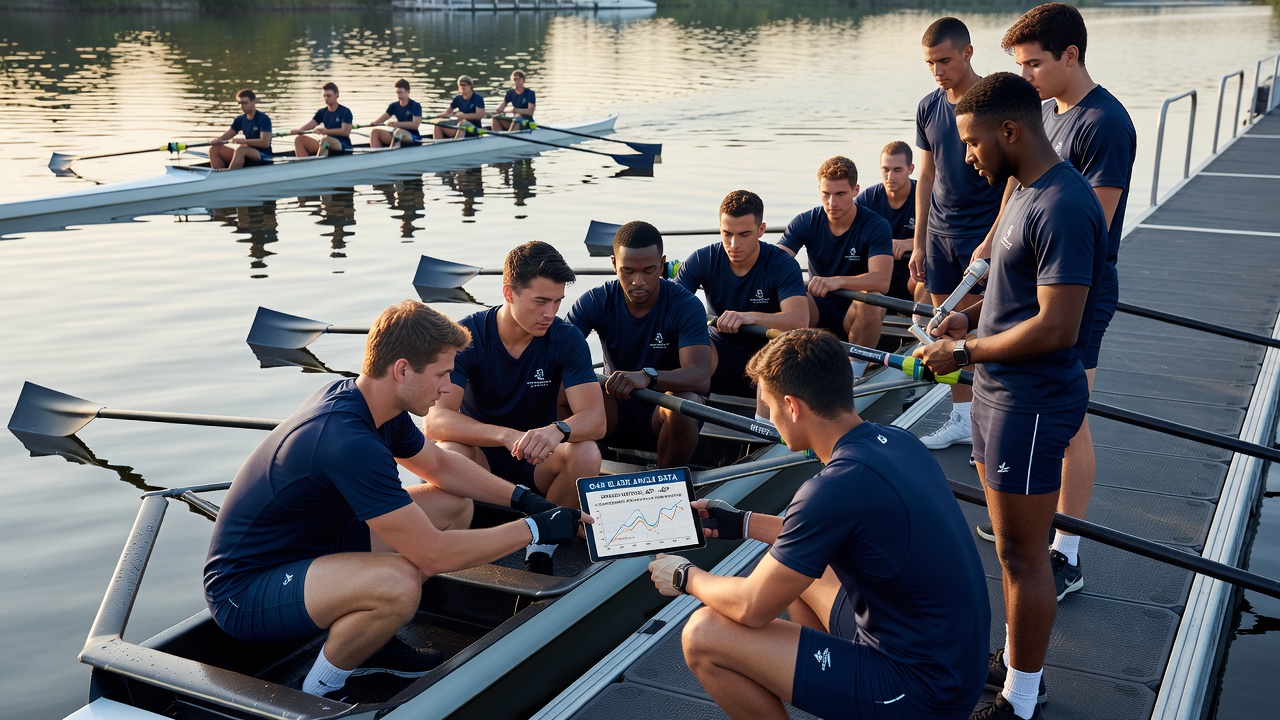
Rowing crews leverage shared oar blade angle data to fine-tune boat configurations prior to seasonal competitions
Rowing crews collect precise measurements of oar blade angles during training sessions and then exchange those readings through digital platforms that connect teams across regions. Data on entry angles, extraction angles, and blade pitch angles flows between crews preparing for major events, and analysts compile the figures into databases that highlight patterns in boat speed and stroke efficiency. Crews review these shared records to adjust rigger heights, spread measurements, and foot stretcher positions before they lock in final setups for the season ahead.
Data Collection Methods in Modern Rowing Programs
Coaches attach sensors to oar shafts and boat hulls so they capture real-time angle information at rates exceeding 100 samples per second, and the resulting streams reveal how small deviations in blade orientation affect propulsion and boat stability. Research from the Australian Institute of Sport demonstrates that crews who log entry angles between 55 and 65 degrees relative to the water surface consistently record lower drag coefficients during the drive phase. Technicians calibrate each sensor against known benchmarks at the start of every session, and software flags outliers that might indicate equipment wear or technique drift.
Programs in North America and Europe integrate these measurements with GPS and force-plate data so analysts can correlate blade angles with overall hull velocity and stroke rate. Observers note that teams often upload anonymized files to centralized repositories maintained by national rowing federations, which allows other squads to compare their own numbers against aggregated trends without revealing proprietary training details.
Shared Platforms and Community Exchange Practices
Digital archives maintained by organizations such as World Rowing now include modules specifically designed for blade-angle datasets, and users tag entries with boat class, crew weight category, and water conditions. European clubs contribute records gathered on teh Rhine and Danube while North American teams add data from coastal and lake venues, creating a geographically diverse pool that researchers mine for configuration insights. Crews query the system for matches that align with their target race distances and then download filtered subsets that show which angle ranges produced the highest average boat speeds in similar conditions.
University laboratories in Canada and New Zealand publish periodic summaries of these community datasets, and their reports indicate measurable convergence in preferred blade angles among elite crews over successive seasons. Technicians cross-reference the shared figures with their own wind-tunnel and tank-test results so they can predict how angle adjustments will translate to on-water performance when boats move into competition configurations.
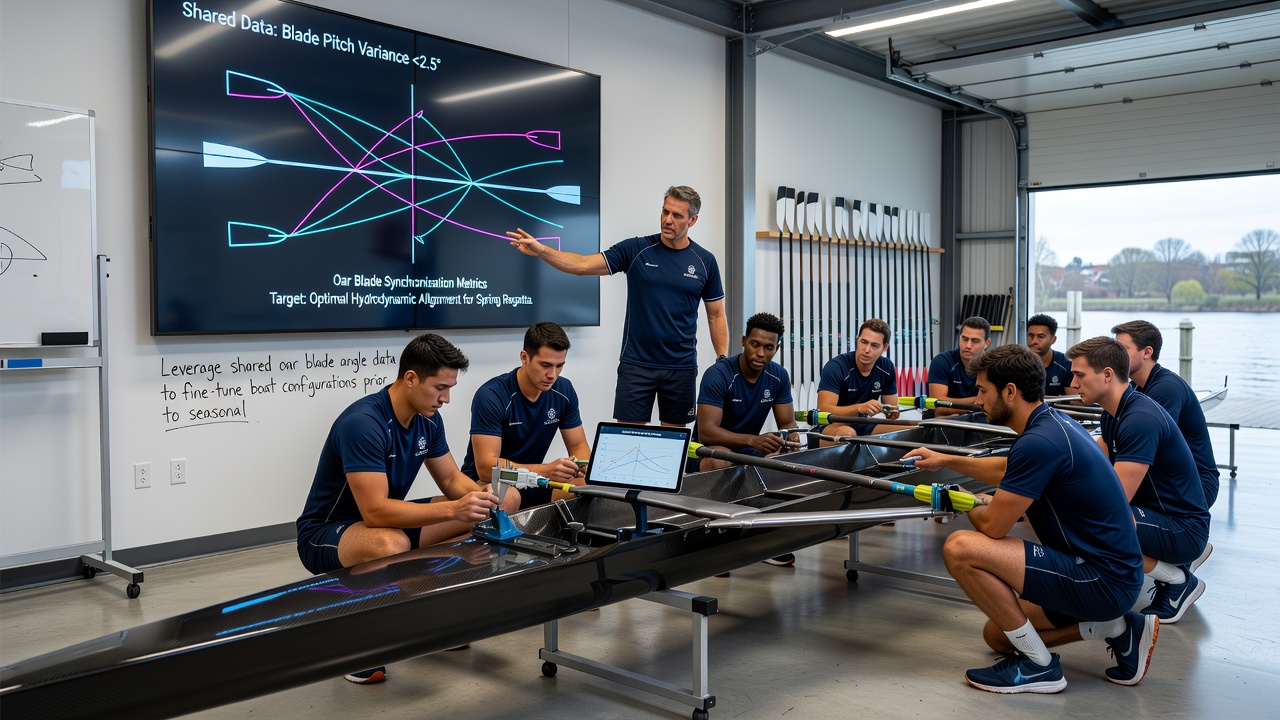
Adjustments to Boat Configurations Driven by Angle Data
Once crews identify optimal angle ranges from the shared records they alter oarlock pitch by fractions of a degree and shift rigger spread to maintain consistent blade immersion throughout the stroke. Riggers move outward or inward by millimeters while technicians verify that the new settings keep entry and extraction angles within the performance windows documented by peer teams. These micro-adjustments accumulate across an eight-person shell so the entire crew maintains synchronized blade paths that reduce yaw and improve forward propulsion.
Seat positioning changes follow directly from the angle analysis because foot-stretcher placement influences the torso angle at the catch and therefore the blade entry trajectory. Data shared ahead of the 2026 world championship season shows crews that narrowed their spread by 0.5 centimeters after reviewing peer angle logs recorded improvements in stroke length without increases in perceived effort. Technicians document each change in the same databases so subsequent users can trace which configuration produced the observed angle outcomes.
Preparation Timelines Leading into August 2026 Events
National teams begin intensive data-sharing cycles six months before August 2026 competitions so they can iterate through multiple boat setups during spring and early summer training blocks. Analysts compare pre- and post-adjustment angle distributions to confirm that modifications produce stable improvements across varying wind and current conditions. Crews schedule dedicated testing days where they row repeated 2000-meter pieces while sensors capture every blade pass, and the resulting files feed directly into configuration models used by boat builders and equipment suppliers.
Regional federations coordinate exchange windows so smaller programs gain access to the same datasets employed by larger national squads, and this leveling effect appears in the narrowing performance gaps documented in preliminary regatta results. Observers track how many crews reference specific archived angle profiles when they finalize equipment lists submitted to event organizers in the weeks before August competitions begin.
Conclusion
Shared oar blade angle data now forms a core input for rowing crews refining boat configurations ahead of seasonal competitions, and the practice continues to expand as sensor technology and database tools improve. Teams that systematically compare their measurements against community records achieve more consistent stroke mechanics and measurable gains in boat speed. The approach relies on precise collection methods, open exchange platforms, and iterative adjustments that align equipment settings with documented performance benchmarks across multiple regions and conditions.