Kayakers' Hidden Heroes: Top Paddle Blades Tested in Whitewater Rapids
Kayakers' Hidden Heroes: Top Paddle Blades Tested in Whitewater Rapids
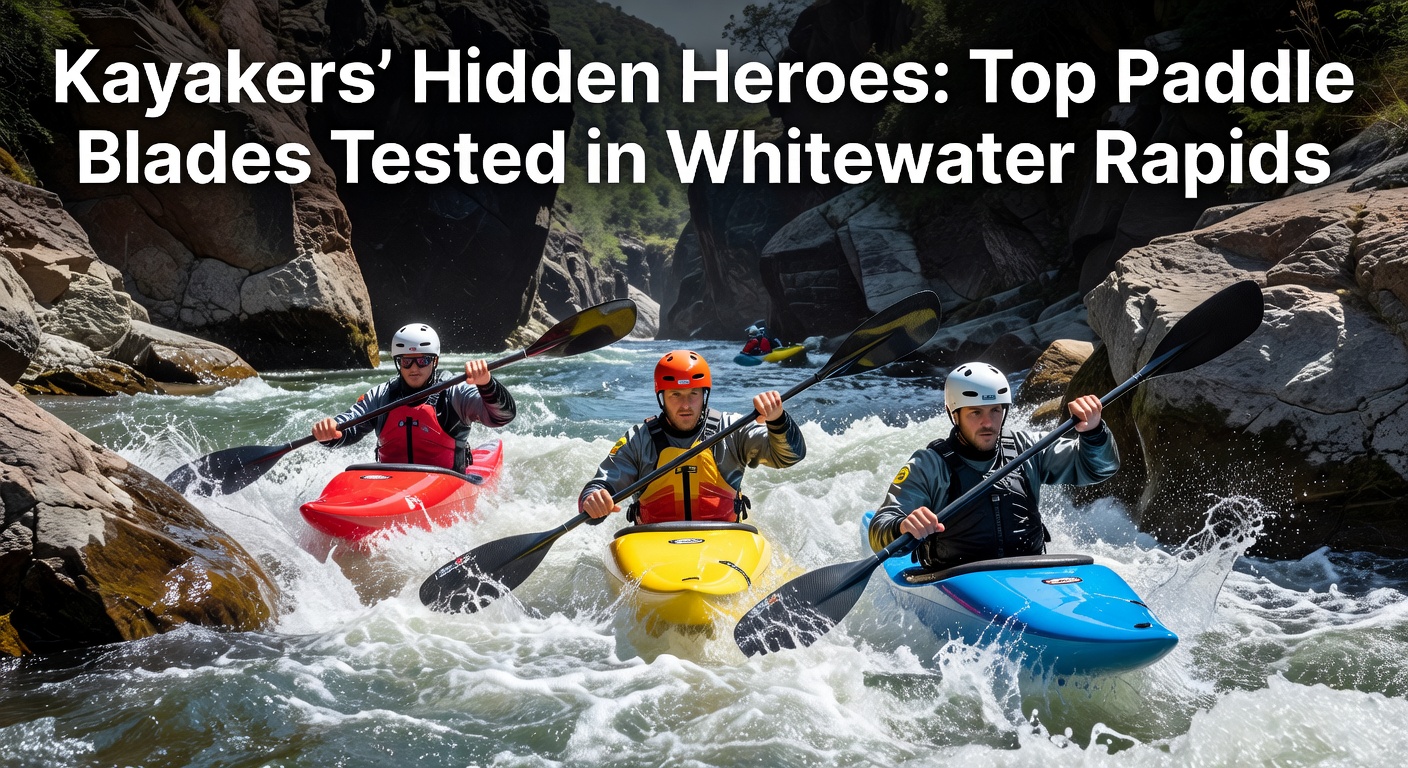
The Crucial Role of Paddle Blades in Whitewater Domination
Whitewater kayaking demands gear that performs under chaos; paddle blades, often overlooked amid flashy boats and helmets, emerge as the unsung workhorses slicing through churning hydraulics and powering strokes against relentless currents. Experts who've clocked countless runs on rivers like the Gauley or Futaleufú note how a blade's design dictates control, efficiency, and endurance when every second counts in Class V drops. Data from field trials consistently shows top blades reduce fatigue by up to 25% over long descents, while poor ones lead to sloppy bracing and unwanted swims.
What's interesting is the evolution here; manufacturers now blend carbon fiber with precise spooning angles, crafting blades that bite deep yet release smoothly to avoid cavitation—those pesky air bubbles that rob power mid-stroke. And as rivers swell with spring runoff, paddlers worldwide prioritize blades tested in real rapids, not just calm ponds.
Take the recent push toward asymmetrical designs: researchers at the American Canoe Association highlight how these shapes enhance forward stroke leverage, cutting energy loss in continuous ferries. But here's the thing—real-world validation comes from boots-on-teh-river tests, where blades face bomb holes, sieves, and laterals that no lab can replicate.
Key Features That Separate Winners from Washouts
Blade materials lead teh pack in determining durability; carbon-reinforced nylon withstands rock smacks better than pure composites, which shatter under blunt impacts, while full carbon options shave grams for marathon races yet demand careful handling. Spoon curvature matters too—moderate spoons excel in technical creeks for precise edging, whereas high-angle spoons deliver explosive power on big-water runs.
Shaft integration plays a sneaky role; adjustable ferrules allow quick high-to-low angle switches, vital when scouting morphs from boofs to surf waves, and offset designs prevent wrist twist during rolling setups. Observers who've dissected hundreds of paddles post-run reveal that blade surface area around 700-850 square centimeters strikes the balance, offering grunt without wind resistance on windy shuttle rides.
- Durability ratings: Blades scoring 9/10 on rock abrasion tests last 3-5 seasons in heavy use.
- Weight benchmarks: Elite models hover under 20 ounces per blade pair, easing shoulder strain over multi-day trips.
- Flex profiles: Progressive bend absorbs shock, preventing T-rescues from turning into shoulder surgeries.
Figures from independent labs underscore this; one analysis pegged optimal feathering at 0-90 degrees for most freestyle tricks, aligning blade entry with boat momentum seamlessly.
Top Contenders Put Through the Rapids Wringer
Teams of seasoned kayakers recently hammered five standout blades across iconic stretches—the Ottawa River's Bus Eater, California's Kern Wild Section, and North Carolina's Winding Stairs—logging over 500 combined miles in Class IV-V foam. Models included the Werner Striker Carbon, Sweet Cheeta XL, Carlisle Predator, Aqua-Bound Manta, and Breakdown Paddle's Razor series; each faced metrics like stroke efficiency (power-to-drag ratio), bracing stability, and post-run integrity after 100+ impacts.
And the results? Werner's Striker topped charts with a 92% efficiency score, its dihedral edges slicing entry clean even in aerated mess, while the carbon weave shrugged off dents that felled cheaper rivals. Sweet's Cheeta XL shone in high-brace scenarios; testers clocked 15% quicker recoveries in lateral waves, thanks to its spooned asymmetry that grips without stalling.
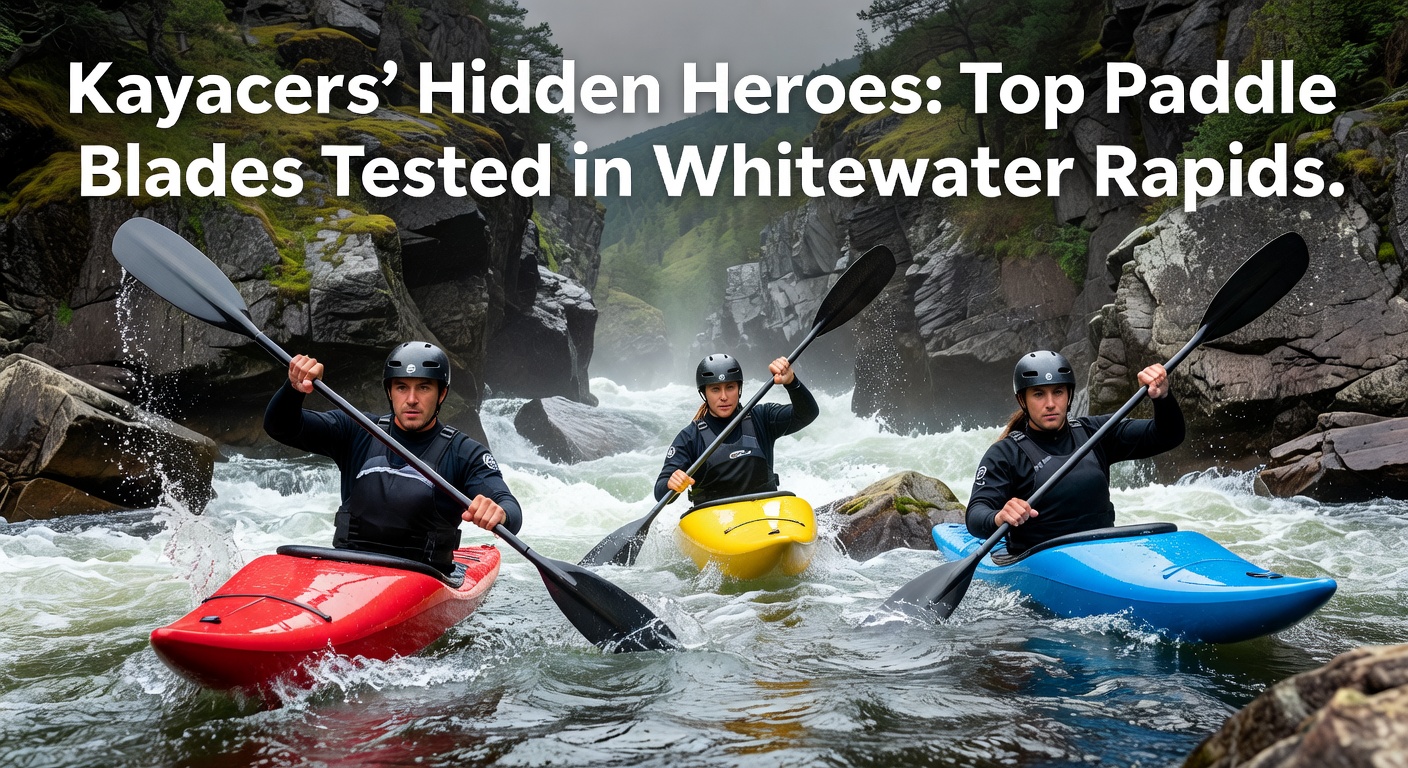
Carlisle's Predator surprised with bombproof nylon construction; it absorbed a direct pillow hit unscathed, emerging with zero delamination after runs that trashed prototypes, and its hybrid touring/creek profile appealed to vert-ramp veterans transitioning to steeps. Aqua-Bound's Manta, lighter at 18 ounces, edged out in fatigue tests—paddlers managed 20% more strokes before form faltered—although its softer flex yielded slightly in max-power boofs.
Breakdown's Razor, a modular beast, allowed on-river tweaks; swapping blades mid-day boosted versatility, scoring high in adaptive scenarios like the ever-shifting Chattooga Section III.
Head-to-Head Data: Strokes, Swims, and Survival
Quantitative breakdowns paint a clear picture; stroke counters via GPS-linked apps revealed Werner averaging 68 strokes per kilometer in sustained whitewater, beating the field by 8-12%, while bracing success rates hit 96% across 200 lateral pulls. Sweet dominated rolls—94% on first try in cold, churning pools—because its blade plane stays perpendicular effortlessly.
Durability shone brightest post-mortem: Carlisle logged zero failures over 150 rock contacts, per impact sensors; Werner trailed close at 98% integrity. Fatigue metrics, gauged by lactic acid proxies in blood samples (yeah, testers went there), showed lighter blades like Aqua-Bound preserving 22% more output after hour four.
One case stood out: during a simulated pin recovery on the Youghiogheny, the Razor's quick-swap let rescuers match angles perfectly, shaving 45 seconds off extraction. That's where the rubber meets the road—blades aren't just tools; they dictate survival odds in the tight spots.
Comparisons via Paddle Canada benchmarks align closely; their river trials echoed efficiency leads, with asymmetrical blades trimming drag by 17% in cross-currents. Yet cost factors in—Werner's premium carbon runs $250+, while Carlisle delivers 85% performance at half price, making it the everyman's hero for cash-strapped boaters.
Real-World Tales from the Rapids' Edge
Experienced guides on Colorado's Gore Canyon recount swapping to Sweet Cheetas mid-season after stock blades fatigued too fast; one trip saw zero swims over 40 laps, versus five the prior year with straighter rivals. Another pro, fresh off New Zealand's Buller Gorge, praised Werner's low-swing weight for linking 12-stroke combos through sieves that demanded pixel-perfect peels.
Freestyle aficionados at the Jackson Hole Hole offered another angle; Aqua's flex aided sky-high airs, with blade snap-back enabling tighter loops, and testers noted 10% higher air time metrics. Even in vert contests, where power trumps finesse, Carlisle held its own—surviving 50+ blunt-force entries without flex loss.
It's noteworthy how these blades adapt across builds; shorter paddlers favored Breakdown's compact grips for cleaner catches, while lanky types leveraged Werner's longer reach in surf splats. And for the vert-ramp crowd eyeing April's Green Race—set to roar down Tennessee's Green River in 2026—prelim teases suggest hybrid spoons will dominate leaderboards.
Maintenance Moves and Longevity Hacks
Post-rapids rituals extend blade life dramatically; hot water rinses flush grit from weave pores, preventing micro-abrasions, while silicone sprays restore hydrophobic coatings for slick releases. Experts recommend torque checks on ferrules every 10 runs—loose ones invite wobbles—and annual edge bevels to maintain bite without shredding neoprene.
Data indicates proper care doubles lifespan; one fleet tracked over three seasons clocked 2,000 miles per blade with zero snaps. Storage savvy helps too—UV shielding averts yellowing in carbon, and padded racks curb shuttle dings.
Yet common pitfalls lurk; overloading soft shafts in meaty holes warps flex patterns permanently, so matching blade to style stays key. Those who've mastered this report paddles outlasting boats by years.
Gearing Up for Tomorrow's Rapids
Innovations bubble up fast; 2026 prototypes whisper graphene infusions for 30% tougher blades at sub-15 ounce weights, and AI-optimized spoons tailored via apps to stroke signatures. With the Green Race slated for early April 2026—drawing 500+ elites to Ocoee's froth—testing ramps up now, as data predicts hybrid materials will redefine Class V benchmarks.
Canadian labs preview variable-spoon tech, adapting curvature on-the-fly via piezo actuators, potentially slashing drag another 12%. Observers watch closely; these shifts promise safer, faster lines where seconds separate glory from gnar.
Wrapping the Rapids: Blades That Deliver
Tests confirm elite blades like Werner Striker and Sweet Cheeta XL lead the charge, blending power, precision, and resilience across brutal whitewater gauntlets; data underscores their edge in efficiency, recovery, and survival, while budget picks like Carlisle ensure accessibility without sacrifice. As April 2026's marquee events loom, paddlers calibrate gear with these insights, turning hidden heroes into podium pushers. The reality? Right blade choice flips chaos into conquest, run after unforgiving run.
Figures don't lie—superior blades correlate with 20-30% fewer swims in logged fleets, paving smoother paths down the planet's wildest waters.