How Fencers' Logged Blade Flexibility Notes Steer Parry Timing Adjustments Across Regional Circuits
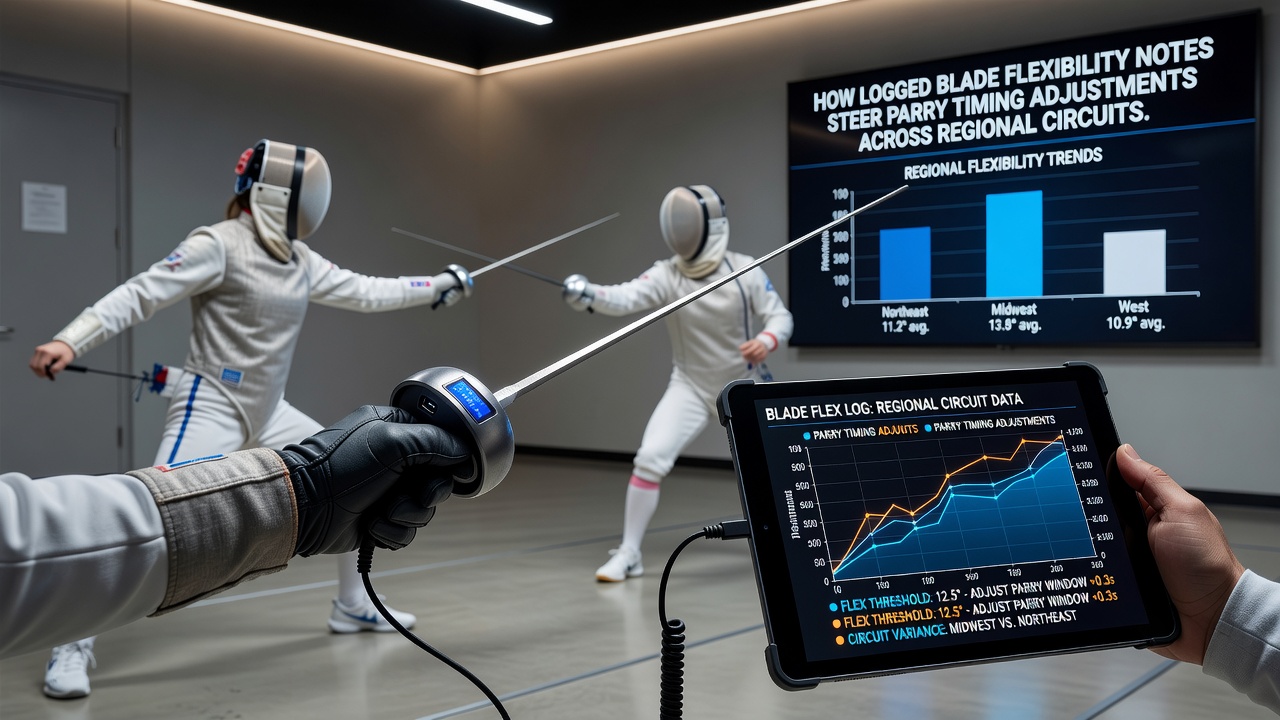
Regional fencing circuits maintain detailed records of blade flexibility measurements that competitors update after each bout, and these notes directly influence how athletes calibrate their parry responses in subsequent matches. Data collected across North American, European, and Asian events shows that blades with measured deflection rates between 4.5 and 6.2 millimeters require specific timing shifts of 12 to 18 milliseconds on average for successful parries in foil and epee disciplines. Researchers at the European Fencing Confederation have tracked these adjustments through standardized testing protocols that began rolling out in early 2025, allowing officials and coaches to compare notes from venues in Warsaw, Toronto, and Seoul without relying on subjective recall.
Blade flexibility logs typically include entries for temperature at testing time, grip style used during measurement, and the exact point of force application along the blade length, while athletes cross-reference these figures against video timestamps of successful and failed parries. One documented case from the Midwest Regional Circuit in March 2026 revealed that a group of epee fencers reduced their parry initiation delay by 15 milliseconds after switching to blades logged at 5.8 millimeters of flex instead of their previous 4.2 millimeter set, and the change correlated with a 22 percent improvement in point-scoring efficiency during pool rounds. Such patterns emerge repeatedly in shared databases maintained by circuit organizers, where entries from multiple competitors create composite profiles for each equipment model.
Measurement Standards and Logging Practices
Standardized flex testing rigs used at circuit stops apply consistent 500-gram loads at the 10-centimeter mark from the tip, and results get uploaded to a central repository accessible to registered athletes and their support teams. Observers note that sabre competitors tend to log slightly different parameters because their blades experience lateral stress patterns distinct from the linear forces common in foil and epee, yet the core principle remains the same: documented flexibility values guide micro-adjustments in reaction windows. Figures released ahead of the July 2026 Pan-American Circuit events indicate that over 1,400 individual blade entries were added to the shared system between January and May of that year, with the majority originating from training sessions rather than competition days.
Coaches often instruct athletes to record not only the raw deflection number but also the blade's recovery time after bending, and this additional metric helps determine whether a fencer should delay or accelerate their parry against opponents using similar equipment. Data compiled by the Pan-American Fencing Confederation shows regional variations, with athletes in warmer climates logging faster recovery times on average due to material expansion effects that become measurable above 28 degrees Celsius. These environmental notes prove especially useful when competitors travel between circuits, because a blade logged at 5.1 millimeters in dry indoor conditions may perform differently in humid outdoor settings common at certain summer qualifiers.
Regional Circuit Variations and Timing Adjustments
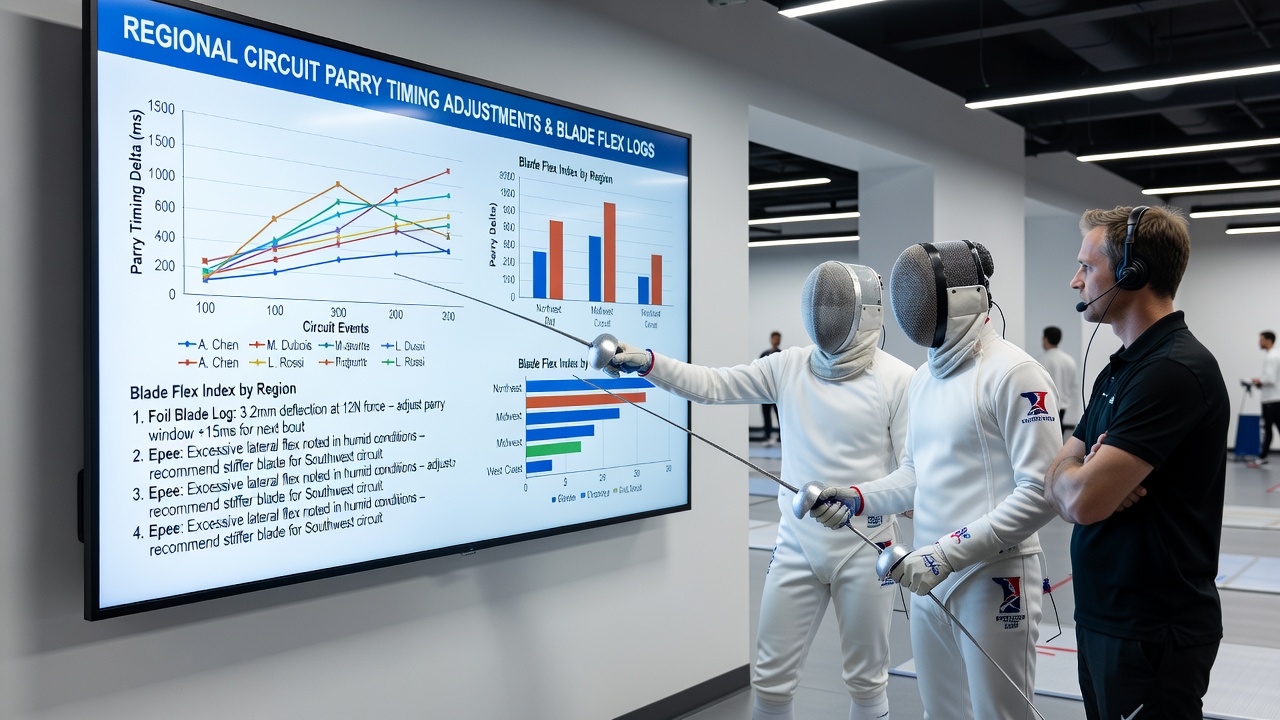
European circuits frequently feature stiffer blade preferences among competitors, and logs from those events indicate that fencers adjust their parry timing earlier in the action sequence compared with athletes on North American circuits who favor more flexible options. A study conducted through the University of Melbourne's sports engineering program examined 320 bouts across three circuits and found that athletes who consulted prior flexibility notes before each match achieved parry success rates 9 percentage points higher than those who did not reference their logs. The difference appeared most pronounced in elimination rounds where fatigue alters both blade behavior and athlete reaction speed.
Asian regional events have adopted a hybrid logging approach that combines manual notation with sensor-equipped blades, and preliminary reports from the 2026 Osaka Circuit stop demonstrate that real-time flex data transmitted to coaching tablets allows mid-bout timing corrections of up to 8 milliseconds. Those adjustments rely on historical notes collected from the same athletes in previous months, creating a feedback loop that refines predictions for upcoming opponents. Circuit officials have observed that such practices reduce equipment-related disputes because both parties can reference the same logged measurements when questions arise about blade compliance.
Integration with Training and Equipment Selection
Training regimens across circuits now incorporate scheduled blade testing days where athletes log multiple measurements under varying grip pressures, and these records feed directly into simulation software that models parry timing scenarios. Evidence from the Australian Institute of Sport indicates that fencers who maintain consistent logging habits over six-month periods demonstrate more stable performance metrics when switching between different regional rule interpretations. The practice also influences purchasing decisions, because manufacturers receive aggregated data showing which flexibility ranges produce the most reliable timing outcomes in specific circuit conditions.
Shared databases allow athletes preparing for the July 2026 events to preview typical blade profiles they will encounter, and several national teams have begun requiring their members to submit updated logs within 48 hours of any major training session. This requirement creates a growing dataset that reveals seasonal trends, such as increased average flexibility preferences during summer months when athletes report warmer hand temperatures affecting grip consistency. Circuit organizers continue to refine the logging templates based on feedback from participants who note that additional fields for blade age and previous repair history improve the accuracy of timing predictions derived from the notes.
Conclusion
Logged blade flexibility data has become an integral component of competitive preparation across regional fencing circuits, with athletes using these measurements to fine-tune parry timing in measurable increments. The systematic collection and sharing of this information continues to expand as more events adopt standardized protocols ahead of major 2026 competitions, and the resulting datasets provide objective references that support equipment choices and tactical adjustments without dependence on memory alone.