How Archived Rower Oar Blade Angle Data from Club Logs Refines Stroke Efficiency Patterns Ahead of Coastal Regatta Seasons
Eden Schmidt · Aug 17, 2026
How Archived Rower Oar Blade Angle Data from Club Logs Refines Stroke Efficiency Patterns Ahead of Coastal Regatta Seasons
Coastal rowing clubs maintain detailed logs that capture oar blade angles during training sessions, and these records allow analysts to identify recurring patterns in stroke mechanics that directly influence efficiency on open water. Data from multiple seasons shows how specific angle measurements correlate with reduced energy expenditure and improved propulsion across varying wave conditions, while teams prepare for events scheduled through August 2026.
Club volunteers and coaches record blade angles at entry, mid-drive, and exit phases using standardized measurement tools attached to oars or integrated into boat sensors. These entries create time-stamped datasets that researchers later cross-reference with GPS speed readings and heart rate monitors to quantify performance shifts. Patterns emerge when analysts compare entries from calm days against those recorded during windier sessions, revealing adjustments that maintain consistent power output despite environmental changes.
Data Collection Practices in Rowing Clubs
Many established clubs along coastlines in North America and Europe store blade angle information in shared digital repositories that date back five to ten years. Members upload session summaries after each outing, noting variables such as wind speed, tide direction, and crew composition alongside the angle figures. This systematic approach produces longitudinal records that training staffs consult when planning pre-regatta cycles.
Studies from institutions like the Australian Institute of Sport demonstrate that archived angle data helps crews fine-tune the transition from catch to drive phase, resulting in measurable reductions in stroke variability. Observers note that crews with access to historical club logs often display more uniform blade paths during simulated race pieces, which supports sustained boat speed over longer distances typical of coastal events.
Blade Angle Influence on Stroke Efficiency
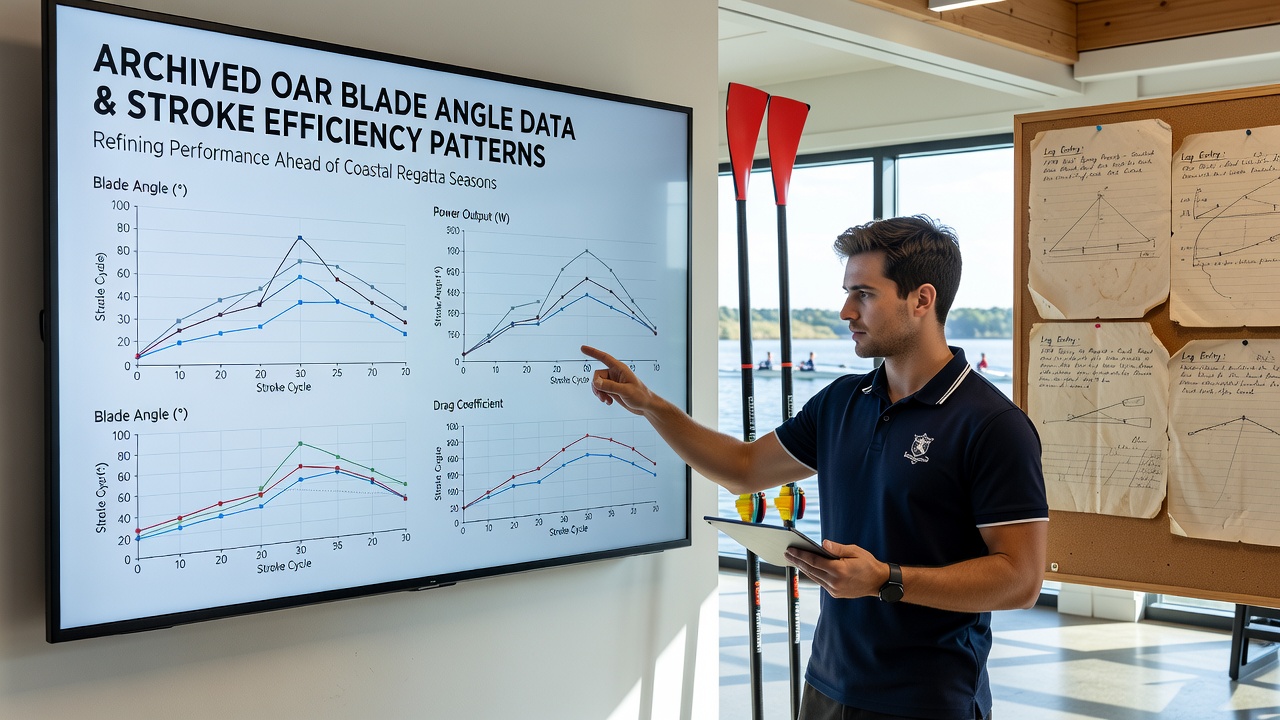
Blade angle at entry determines how cleanly the oar engages the water surface, and logs indicate that angles between 30 and 35 degrees relative to the horizontal frequently appear in efficient strokes on choppy coastal waters. Mid-drive angles that stay close to perpendicular minimize slippage and maximize force application, according to aggregated club records. Exit angles that allow smooth release reduce drag, and repeated measurements show these values cluster tightly among top-performing crews.

Coaches examine these clusters to detect deviations that signal fatigue or technical breakdown. When angle drift exceeds established thresholds, training plans incorporate targeted drills that restore optimal positioning. Evidence from multiple club archives suggests that consistent monitoring leads to incremental gains in meters per stroke, particularly when crews adapt entries to match shifting wave patterns encountered during regattas.
Application Ahead of Coastal Regatta Seasons
Preparation timelines for events in August 2026 incorporate reviews of past season logs to anticipate common angle adjustments required by specific venues. Analysts map historical data against course maps and tidal charts, then generate predictive models that crews test during spring and early summer training blocks. This process allows rowers to rehearse refined stroke patterns under conditions that mirror competition demands.
Teams from different regions share aggregated findings through rowing federations, which compile comparative statistics without revealing individual crew identities. Such collaboration highlights regional variations, for instance how Pacific Northwest clubs record steeper entry angles than those along the Mediterranean due to prevailing swell directions. These comparisons inform equipment tweaks, such as oar length modifications that support desired blade angles without increasing rower strain.
Emerging Patterns from Longitudinal Records
Long-term datasets reveal that crews who maintain blade angle consistency within narrow bands across multiple outings achieve higher average speeds during race simulations. Records also show correlations between angle stability and recovery rates between strokes, which proves critical during back-to-back heats common at coastal regattas. Researchers continue to refine statistical methods that isolate angle contributions from other variables like crew weight and boat rigging.
Digital tools now facilitate rapid querying of club archives, enabling coaches to pull subsets of data filtered by date, weather, or crew experience level. These queries support scenario planning that prepares athletes for both ideal and adverse conditions expected during summer events. Patterns identified through this work guide individualized feedback sessions that address specific technical gaps rather than applying uniform corrections across entire crews.
Conclusion
Archived oar blade angle data from club logs supplies objective benchmarks that rowing programs use to refine stroke efficiency in advance of coastal regatta seasons. By tracking entry, drive, and exit angles across seasons, analysts identify adjustments that enhance propulsion and reduce variability under real-world conditions. Continued access to these records supports targeted preparation for competitions through 2026 and beyond, as crews integrate historical insights with current environmental data to optimize performance on open water.