Fencers Share Insights on Blade Flexibility Variations Shaping Weapon Choices Ahead of Olympic Qualifiers
Quinn Walter · Aug 19, 2026

Fencers Share Insights on Blade Flexibility Variations Shaping Weapon Choices Ahead of Olympic Qualifiers
Fencers across multiple disciplines have compiled extensive shared notes on how blade flexibility variations influence weapon preferences, particularly as athletes prepare for Olympic qualifying events scheduled through 2026 and into later cycles. These observations focus on measurable differences in steel composition, bend patterns, and rebound characteristics that affect control, speed, and accuracy in foil, épée, and sabre events.
Blade Flexibility Metrics and Material Factors
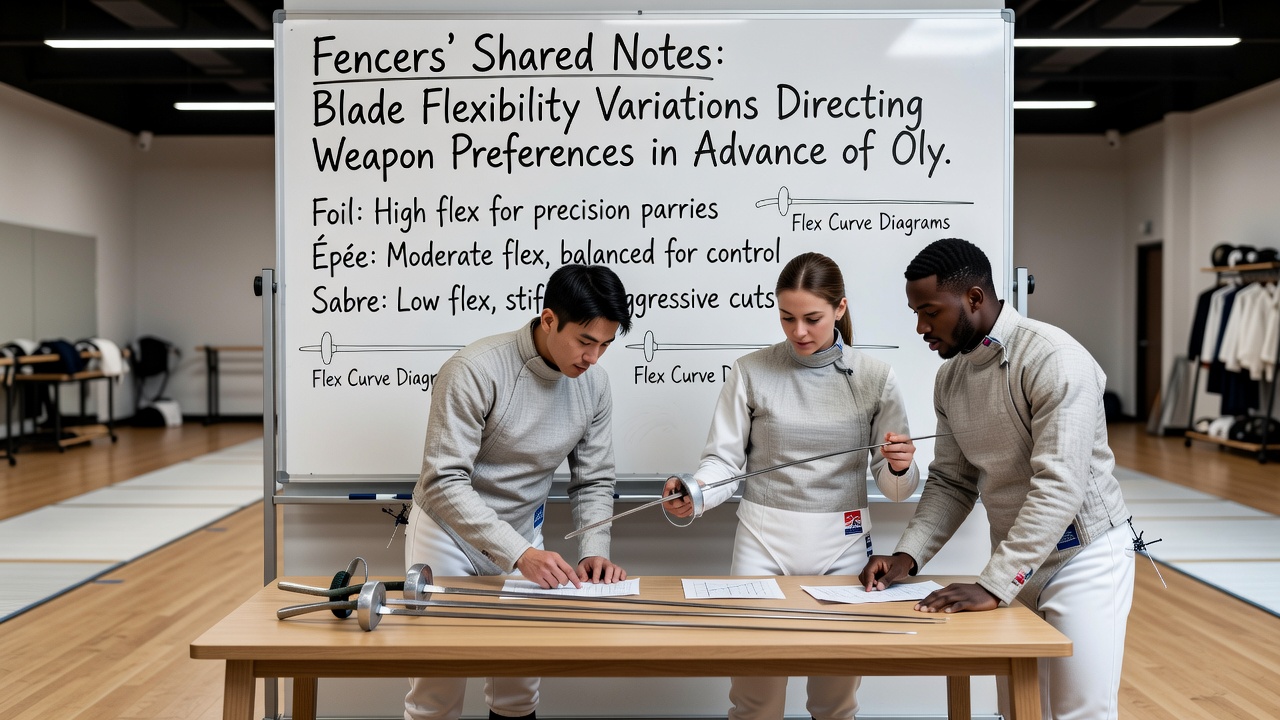
Blade flexibility arises from variations in thickness, taper, and alloy content, with standard FIE-certified blades ranging from stiff configurations that minimize whip to more supple profiles that allow greater tip deviation under load. Data compiled in community archives shows that foil fencers often note preferences for blades with moderate flex in the distal third, which supports precise point control during lunges, whereas épée competitors document advantages in stiffer mid-sections that maintain stability during extended reach actions. Sabre blades, by contrast, exhibit distinct requirements tied to cutting angles and guard interactions.
Researchers at institutions in Europe and North America have measured these properties through standardized deflection tests, revealing that a 1-2 millimeter difference in tip displacement can alter recovery time by several milliseconds. Fencers participating in shared review platforms record these outcomes alongside usage logs from specific manufacturers, creating datasets that link flexibility profiles to performance outcomes in high-level bouts.
Community Archives and Shared Documentation Practices
Online repositories maintained by national fencing federations and international athlete networks have become central to this information exchange. Participants upload detailed entries describing how certain flex patterns interact with their grip styles, footwork tempos, and tactical approaches. One documented case involves a group of European foil specialists who cross-referenced flexibility measurements from multiple training camps, identifying consistent patterns where blades with forward-weighted flex improved hit registration rates on moving targets.
These archives also incorporate video annotations and sensor data from practice sessions, allowing users to compare rebound velocities across blade models. Observers note that such resources prove especially useful during qualification cycles when athletes must select equipment that aligns with evolving rule interpretations and piste conditions.
Influence on Weapon Selection Patterns
Shared notes indicate that flexibility variations frequently direct athletes toward particular weapons or even specific models within a category. For instance, records from North American and Australian fencing communities show that competitors transitioning between foil and épée often cite changes in required blade stiffness as a deciding factor, with stiffer profiles favored for the heavier épée point and more responsive flex preferred in foil exchanges. Sabre fencers contribute separate threads emphasizing durability under lateral stress rather than vertical bend.
According to figures from the International Fencing Federation, equipment registration trends ahead of major tournaments reflect these community-driven insights, with increased uptake of certain blade lines correlating to published performance summaries. Athletes preparing for August 2026 events, including zonal qualifiers and preparatory tournaments, have referenced these archives when finalizing inventories, noting that documented flex characteristics help reduce equipment-related variables during high-stakes selection processes.
Regional Variations in Documentation and Application
Documentation practices differ by region, with federations in Asia and South America contributing localized datasets that account for climate effects on blade performance, such as humidity-related changes in material response. These entries complement European and North American sources, creating a broader picture of how flexibility interacts with environmental factors during international travel for qualifiers.
One study coordinated through academic partners in Canada examined longitudinal data from shared logs and found correlations between preferred flex ranges and injury incidence reports, particularly in wrist and elbow stress patterns. Such findings circulate widely among coaches and equipment managers who advise athletes on customization options like tip weighting or handle adjustments that modify effective flexibility.
Conclusion
Collective documentation of blade flexibility variations continues to inform weapon preferences among fencers targeting Olympic qualification pathways. By aggregating measurements, usage records, and performance annotations from diverse sources, these shared resources support more consistent equipment decisions across training cycles leading into 2026 and subsequent events. The resulting datasets provide a factual foundation for athletes and support staff navigating the technical demands of modern competitive fencing.