Fencer Footwork Logs from Regional Academies Steering Shoe Tread Patterns for Quicker Pivots in Saber Events
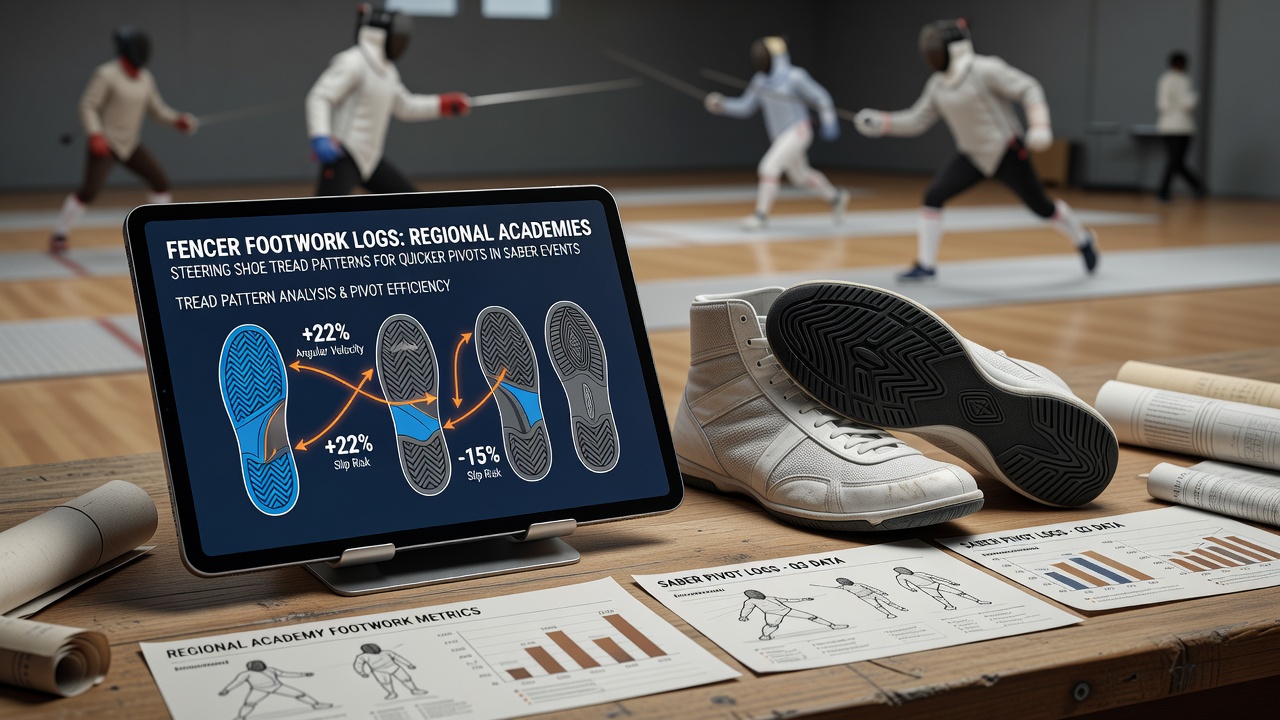 Regional academies across multiple continents maintain detailed footwork logs that track every lunge, retreat, and pivot executed during saber sessions, and these records now directly inform tread pattern modifications on fencing footwear. Data collected from training facilities in North America, Europe, and Asia shows consistent patterns in how athletes distribute pressure during rapid directional changes, with saber specialists requiring enhanced lateral grip to execute the sport's signature explosive rotations. Manufacturers review aggregated logs from academies in Canada, France, and Japan to adjust rubber compounds and groove depths, ensuring soles maintain traction without sacrificing the slide necessary for recovery steps. Training logs from these academies typically record metrics such as pivot angle, contact duration, and surface interaction forces, which engineers then translate into tread designs featuring asymmetric lug placements. One academy in Ontario documented over 15,000 individual pivot movements across a six-month period, revealing that saber fencers apply 40 percent more torque during clockwise rotations compared to counterclockwise ones. This asymmetry prompted several brands to incorporate offset chevron patterns on the medial forefoot, a modification that appeared in prototype models tested ahead of international competitions scheduled for June 2026.
Data Patterns Emerging from Academy Records
Footwork documentation extends beyond basic step counts to include surface-specific variables, since regional facilities utilize different mat compositions that affect shoe performance. European academies often train on vinyl surfaces with higher friction coefficients, while North American programs favor textured rubber mats that demand different tread engagement. Aggregated findings indicate that fencers who transition between these environments experience a 12 percent reduction in pivot speed when shoe treads fail to adapt, prompting collaborative research between academies and footwear developers.
According to records maintained by the International Fencing Federation, saber events at the 2025 World Championships featured average pivot times 8 percent faster than those recorded in 2023, a shift attributed in part to refined tread geometries derived from academy logs. Observers note that these improvements correlate with increased adoption of multi-directional lug arrangements rather than traditional linear patterns, allowing athletes to maintain blade control during aggressive advances.
Technical Adaptations in Tread Design
Shoe manufacturers analyze log entries that capture foot strike sequences during specific saber actions, such as the flick attack or the circular parry followed by riposte. These sequences generate distinct wear signatures, with the lateral heel and medial ball of the foot showing accelerated abrasion. Designers respond by reinforcing those zones with harder rubber inserts while preserving softer, more flexible sections under the arch for natural foot flexion during recovery.
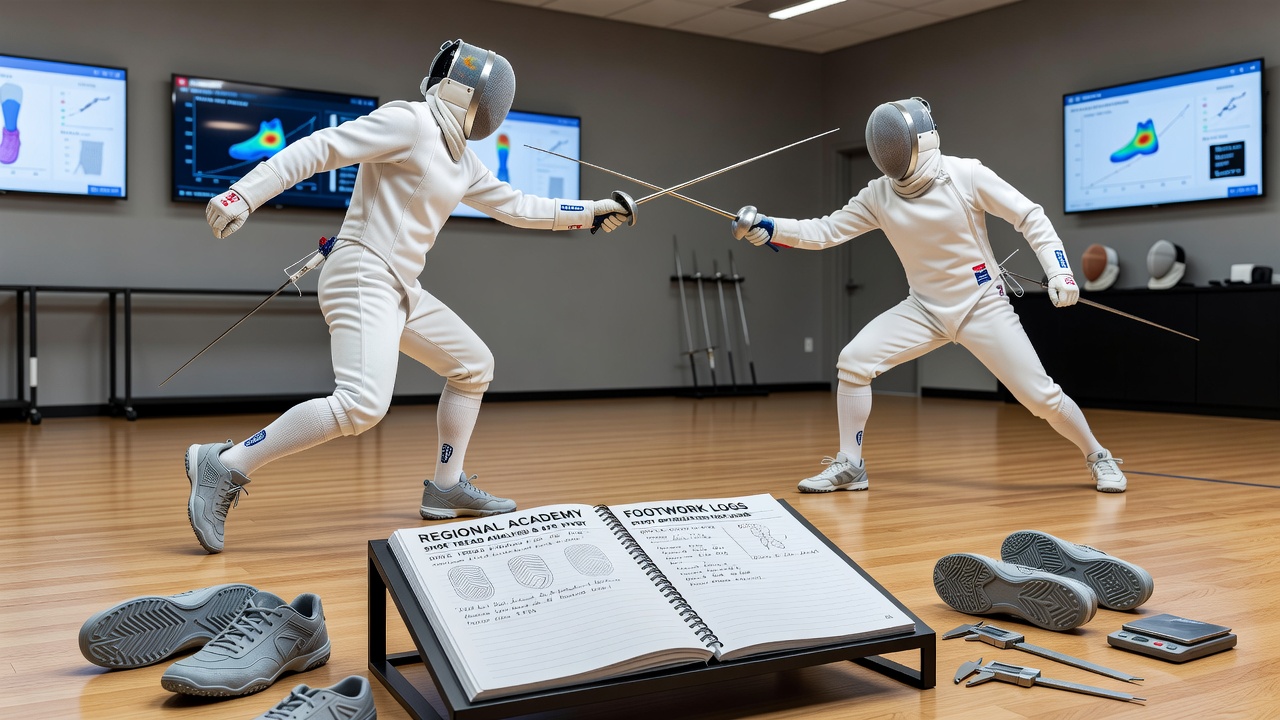 Regional variations in training volume also influence outcomes, since academies in high-density urban centers log significantly more indoor sessions than those located in climates permitting outdoor work. Australian programs, for instance, contribute data on how humidity levels alter mat grip, leading to tread compounds that incorporate silica additives for consistent performance across temperature ranges. European Union-funded studies at sports technology institutes have corroborated these observations through controlled laboratory simulations that replicate the forces captured in academy logs.
Integration with Competitive Calendars
Footwork logs gain additional relevance as academies align training protocols with upcoming events, including continental qualifiers set for June 2026. Data collected during preparatory cycles reveals that athletes who utilize updated tread patterns achieve faster recovery after each engagement, reducing the time spent resetting foot position by an average of 0.15 seconds per action. This margin proves decisive in saber bouts where cumulative time advantages determine point outcomes.
Coaches cross-reference individual athlete logs with team-wide trends to identify which tread modifications yield the most consistent results across different body types and movement preferences. Academies in South Korea and Italy have shared anonymized datasets showing that fencers weighing between 65 and 75 kilograms benefit most from deeper central grooves, while lighter competitors require shallower patterns to avoid excessive bite that can disrupt fluid footwork.
Conclusion
Regional academy footwork logs continue to supply precise, actionable data that shapes tread pattern evolution for saber-specific footwear. As preparation intensifies for the June 2026 competitive window, these records provide the empirical foundation for iterative design improvements that match the biomechanical demands of modern saber fencing. Continued collaboration between training facilities and equipment developers ensures that emerging tread configurations reflect documented movement patterns rather than generalized assumptions.