Community Insights into Golf Club Shaft Flex Variations Guiding Amateur Players Toward Better Swing Adaptations
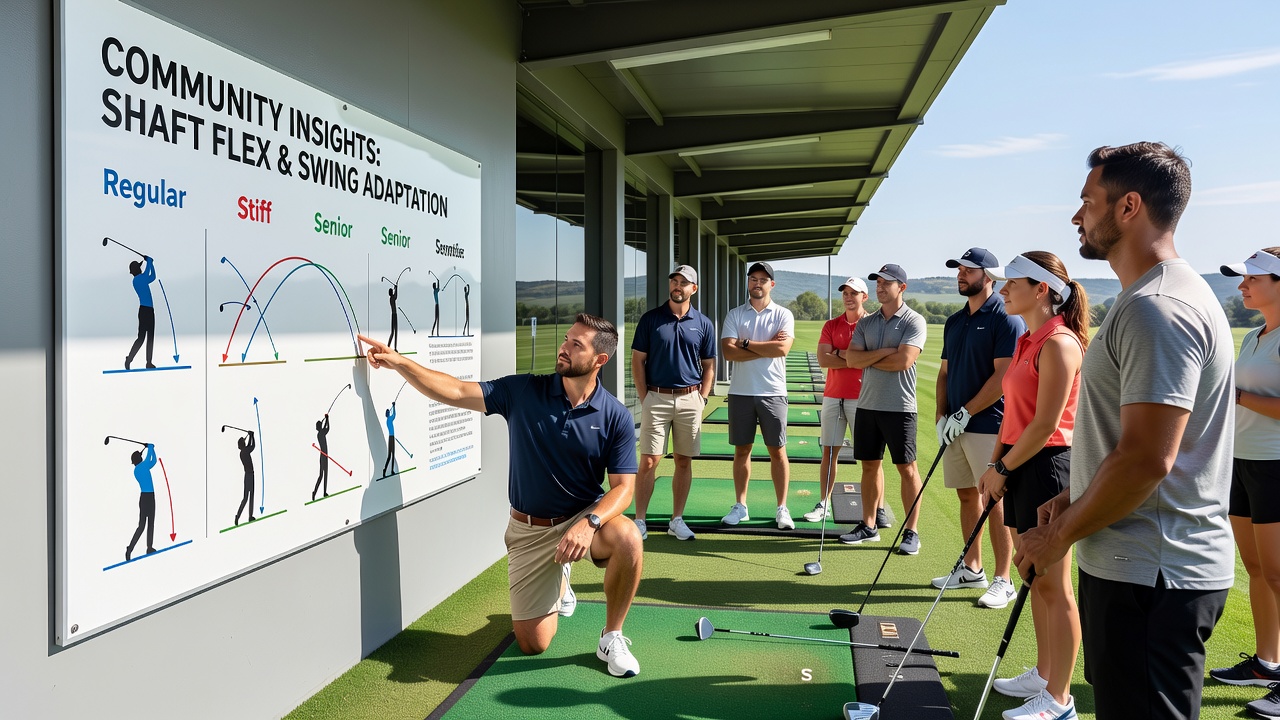 Community discussions across online forums and review platforms have compiled extensive data on golf club shaft flex variations and how these characteristics influence swing mechanics for amateur participants. Shaft flex refers to the degree of bend a shaft exhibits during the swing with categories such as ladies flex light regular regular stiff stiff and extra stiff providing standardized measurements that manufacturers publish based on torque and bend point testing. Data collected from thousands of user submissions indicates that players with swing speeds below 85 miles per hour often report improved consistency when selecting regular or light regular flex options while those exceeding 95 miles per hour frequently document better energy transfer using stiff or extra stiff models.
Understanding Shaft Flex Categories and Performance Metrics
Equipment specifications from major manufacturers outline precise deflection rates under standardized load conditions and these figures reveal how each flex category alters launch angle and spin rate during impact. Regular flex shafts typically exhibit greater bend under load which allows slower swing tempos to generate additional clubhead speed yet this same property can produce inconsistent face angles for faster swings. Observers note that community-shared swing data from video analysis apps shows a pattern where amateur golfers switching from stiff to regular flex experience a measurable increase in carry distance averaging 8 to 12 yards when their tempo matches the shaft profile.
Researchers at golf performance centers have measured these interactions using launch monitors and the resulting datasets demonstrate clear correlations between flex selection and dispersion patterns on the range. Players who document their adaptations often highlight that a shaft with a lower bend point promotes higher launch while a higher bend point stabilizes the tip section for tighter shot shapes.
Community Data Sharing and Swing Adaptation Patterns
Amateur players contribute swing videos and launch monitor outputs to centralized review archives where aggregated statistics track flex preferences across skill levels and age groups. These repositories indicate that golfers aged 40 to 55 frequently transition toward softer flex options after recording reduced wrist snap and lower clubhead speeds during seasonal testing sessions. The shared records also show that mid-handicap players who adjust their grip pressure and transition timing to accommodate a new flex rating achieve tighter dispersion ellipses within four to six range sessions.

According to equipment testing protocols published by the United States Golf Association shaft performance remains one of the most adjustable variables in club fitting yet many amateurs initially overlook tempo matching when selecting replacement shafts. Community contributors respond by posting side-by-side comparison charts that quantify changes in smash factor and spin axis after flex modifications. Those entries consistently demonstrate that players who pair shaft flex adjustments with minor setup alterations such as ball position and stance width report steadier contact points across multiple club types.
Regional Fitting Trends and June 2026 Data Releases
Golf federations in Canada and Australia have begun releasing annual fitting trend summaries drawn from retail and teaching professional submissions with the next scheduled update expected in June 2026. Preliminary figures shared in advance of that release suggest a continued rise in demand for adjustable flex systems among recreational players seeking equipment that accommodates seasonal swing changes. European industry groups including the Swedish Golf Federation have contributed parallel datasets showing similar adaptation rates when players receive guidance from peer-reviewed fitting protocols rather than off-the-shelf purchases.
Amateur networks emphasize that successful swing adaptations require iterative testing rather than single-session decisions and many contributors describe multi-week tracking routines that log launch conditions after each flex trial. These routines often incorporate simple tempo drills using alignment sticks to reinforce the smoother transitions that softer shafts demand.
Practical Outcomes from Aggregated Player Reports
Review compilations reveal that players who document both pre- and post-adaptation metrics achieve more reliable results when they focus on three measurable variables: swing speed consistency, launch angle stability, and spin rate control. Community guidelines compiled from these reports recommend cross-referencing personal launch monitor numbers against manufacturer flex charts before committing to new shafts. Data sets also indicate that hybrid clubs and fairway woods benefit from the same flex matching principles applied to drivers and irons though the effect size appears smaller in shorter clubs.
Those who have studied fitting records note that gradual incorporation of new flex characteristics through focused practice sessions yields higher retention rates than abrupt equipment changes without corresponding swing adjustments. The patterns emerging from these shared insights continue to inform instructional content produced by teaching professionals worldwide.
Conclusion
Community-generated datasets on shaft flex variations provide amateur players with actionable benchmarks for matching equipment to individual swing characteristics. Continued aggregation of launch monitor outputs and adaptation logs promises to refine these guidelines further as new testing protocols and seasonal data become available through established golf organizations.