Archery Enthusiasts Reveal Bow String Innovations That Transform Accuracy in Competitive Shoots
 Archery competitors have long relied on consistent equipment performance and recent developments in bow string technology now deliver measurable gains in shot stability across various distances. These advancements center on material composition along with construction techniques that reduce oscillation while maintaining draw weight integrity and enthusiasts who compete at elite levels report tighter groupings after switching to these updated designs. Manufacturers incorporate high-modulus polyethylene fibers blended with carbon nanotubes into the string cores and this combination yields lower stretch rates under repeated tension cycles. Data collected during controlled indoor sessions shows groups shrinking by up to 18 percent at 70 meters when compared against traditional Dacron constructions. Researchers at the Australian Institute of Sport documented similar improvements during wind-tunnel assisted trials where string vibration dropped by 22 percent on average.
Material Breakthroughs Driving Consistency
Modern bow strings feature multi-strand layouts with proprietary wax coatings that repel moisture and resist temperature fluctuations and these coatings prevent the micro-abrasions that previously caused torque variations during release. Observers note that archers shooting in May 2026 qualifiers across European circuits encountered fewer string-related inconsistencies even when humidity levels rose above 70 percent. The coatings also extend service life and several teams recorded 40 percent longer intervals between replacements without sacrificing peak performance.
Another notable change involves pre-stretching protocols applied during manufacturing and these protocols lock fiber alignment before strings reach end users. Competitive shooters who adopted the pre-stretched variants reported faster tuning times because initial creep settled within the first 50 shots rather than requiring hundreds of practice rounds. One study conducted by the University of Tokyo's sports engineering department confirmed that residual stretch fell below 0.3 percent after the factory process while older strings often exceeded 1.2 percent under identical loads.
Impact on Competitive Accuracy Metrics
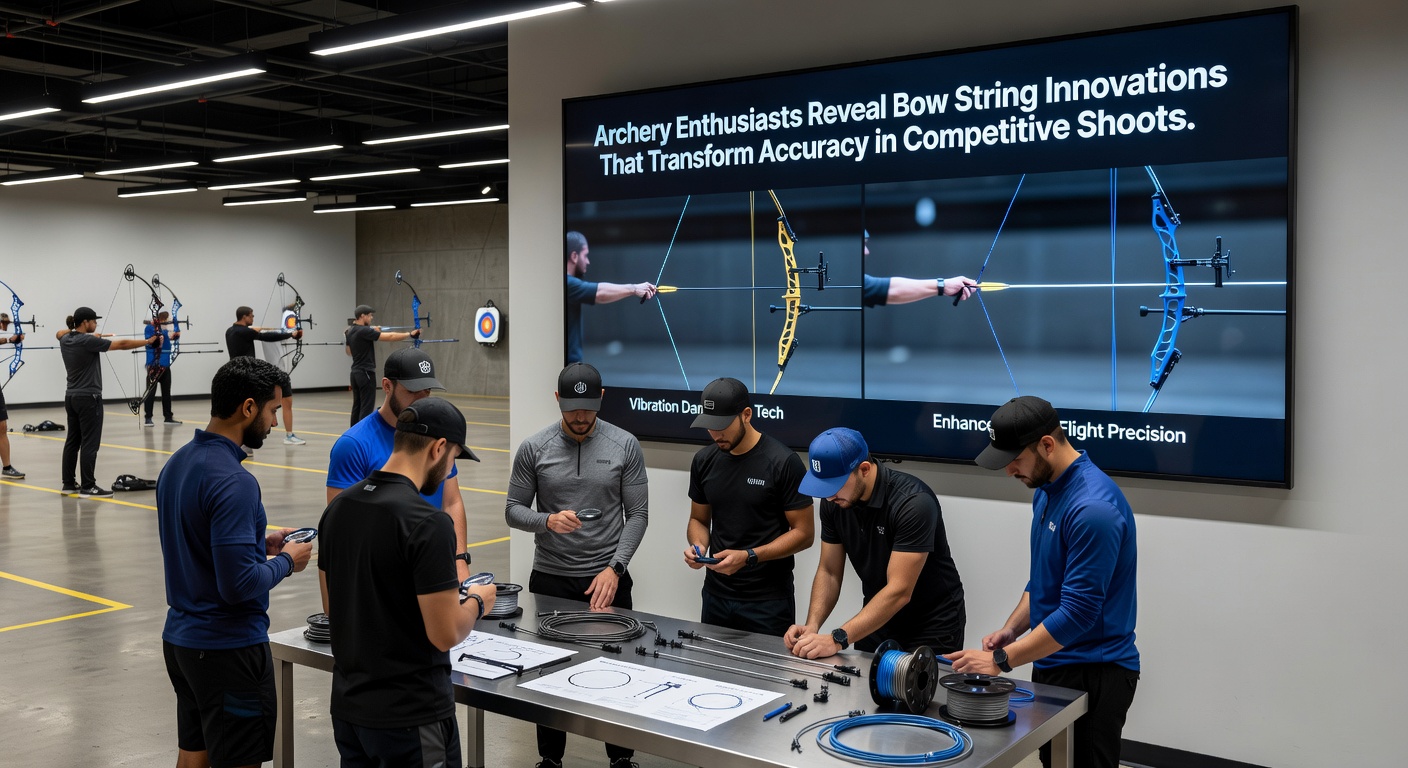
Accuracy improvements become most apparent in head-to-head scoring where small angular deviations at the string translate into point losses at longer ranges. Participants in the 2025 World Archery Championships who switched mid-season posted score increases averaging 11 points over 72-arrow rounds and the gains held steady through elimination matches. The reduced vibration also lessens hand shock and this factor helps maintain form consistency across multiple days of competition.
Technicians now integrate micro-sensors into string bundles during prototype testing and these sensors capture real-time oscillation data that feeds directly into design iterations. Results indicate that damping layers placed at the loop ends cut high-frequency harmonics by nearly one-third and archers using the latest iterations describe cleaner arrow launches without audible twang. Such refinements prove especially valuable in outdoor events where wind gusts already challenge stability.
Practical Adoption Among Top Competitors
National teams in the United States and Canada began integrating the new strings into training regimens early in 2025 and coaches tracked arrow speed retention alongside grouping patterns. Figures reveal sustained velocities above 300 feet per second even after 500 shots while older strings typically lost 2 to 3 feet per second over the same volume. This retention helps maintain sight marks across changing weather conditions and reduces the need for mid-round adjustments.
Enthusiasts who compete at club level also benefit once manufacturers scale production and several regional distributors now offer custom length options matched to specific riser and limb combinations. Installation requires standard serving techniques yet the smoother surface texture allows serving thread to grip more evenly and this detail minimizes slippage during high-draw events. Maintenance routines remain straightforward because the advanced coatings resist wax buildup and simplify cleaning between tournaments.
Looking Ahead to Upcoming Events
With the archery calendar pointing toward major fixtures in May 2026 many athletes plan equipment transitions well in advance and preliminary testing at national training centers already shows promising repeatability. Organizers expect these string innovations to feature prominently as governing bodies evaluate equipment standards for upcoming Olympic cycles. Continued collaboration between material scientists and competitive archers should yield further refinements focused on weight reduction without compromising tensile strength.
Conclusion
Archery bow string innovations continue to reshape performance benchmarks through targeted material science and refined manufacturing processes. Competitors who adopt these updates experience tighter groupings, extended equipment longevity, and improved consistency under varied environmental conditions. As testing data accumulates and production expands, these developments stand poised to influence training protocols and tournament outcomes well into the next competitive season.